
What matters in the first hour?
Containing the water matters more than finding the hole. The opening in the roof is fixed and it is not getting worse while you look at it. The water already inside the assembly is spreading along every rafter and joist it touches, and that spread is what turns a small repair into a large one.
What are the six steps?
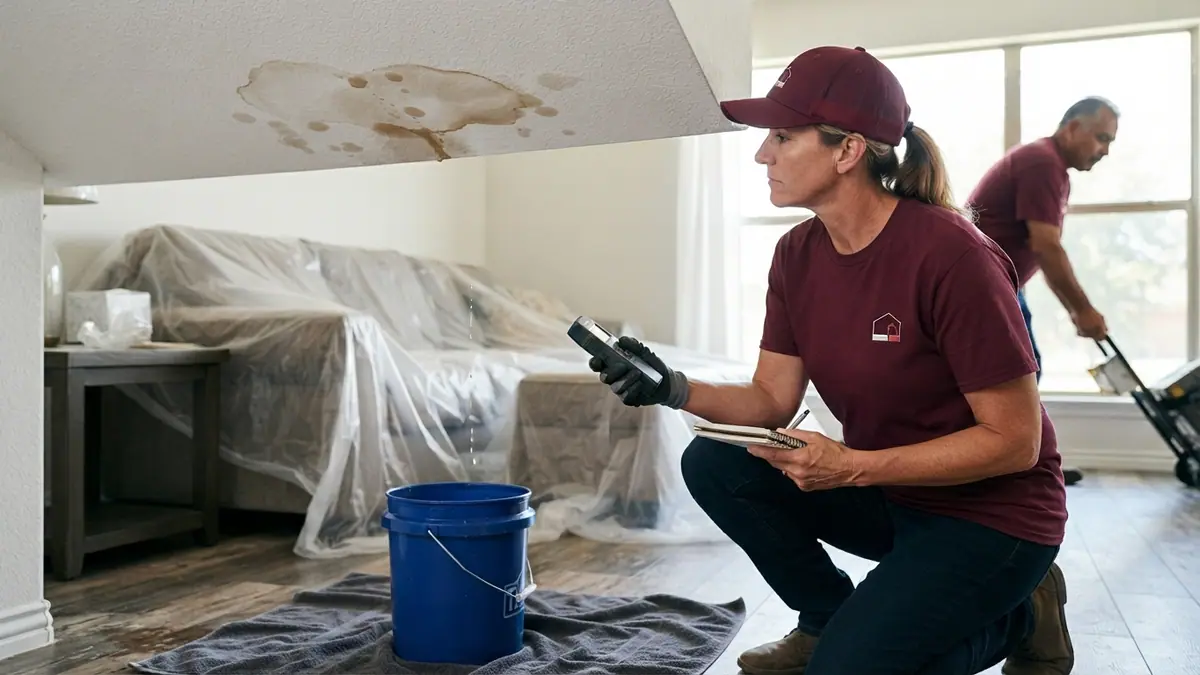
- Release a bulging ceiling. Put a container underneath and pierce the low point with a screwdriver. Letting trapped water out in one controlled spot stops the whole section of drywall coming down and limits the repair to a patch.
- Move what the water can ruin. Electronics, rugs and furniture come out of the room first. Cover what cannot be moved with plastic sheeting rather than cloth.
- Contain the drip. A bucket with a towel in the bottom stops the splash-back that spreads water across the floor. Swap containers before they overflow.
- Cut the power to that room. Water tracking along framing reaches light fixtures and ceiling boxes. Switch the circuit off at the panel rather than using the wall switch.
- Photograph everything, dated. The ceiling, the containers, the room, and the exterior elevation below the affected slope. This is the record an insurer works from.
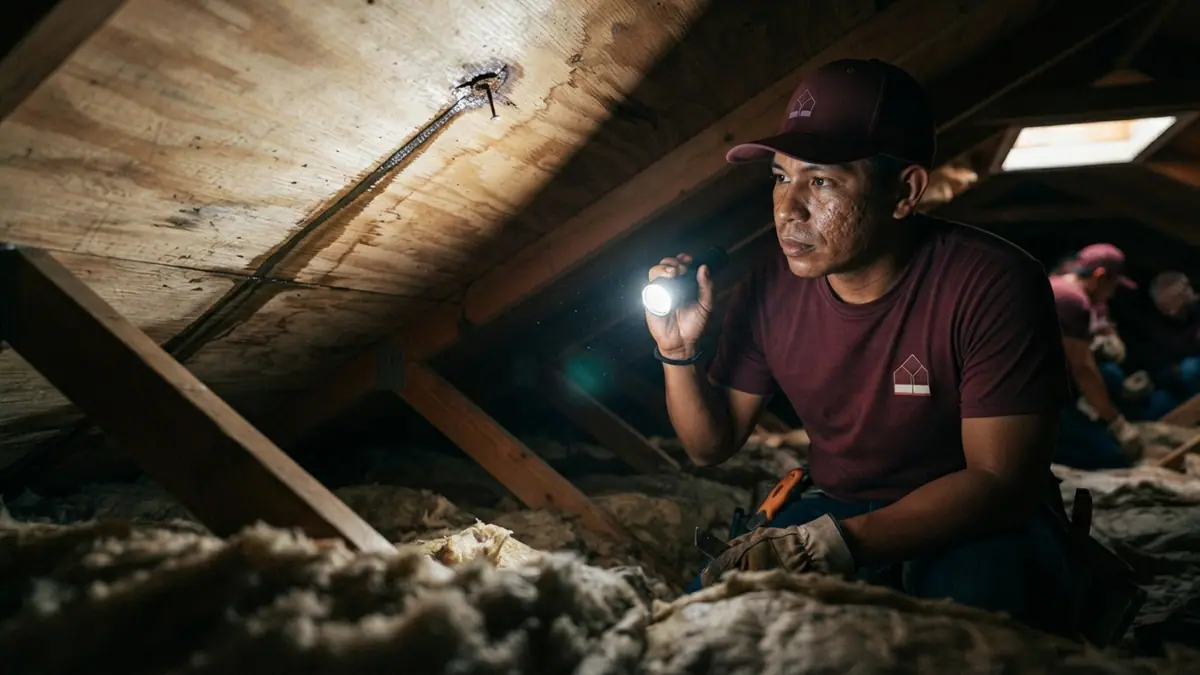
- Check the attic with a flashlight. From inside, on the joists, never on the insulation. A light held low across the sheathing shows the dark tracking line water leaves behind.
Why is the stain never under the hole?
Water enters the roof, lands on the underlayment and runs downhill along the framing until something stops it. It travels to a fastener, a seam or a light fixture, and that is where it drops. The stain marks the exit, which sits feet away from the entry point and usually further down the slope.
A roofer starts in the attic for exactly this reason. Following the tracking line uphill ends at the penetration that failed, and guessing from the stain's position on the ceiling sends people to the wrong part of the roof.
What must nobody do?
Stay off a wet roof. Shingles are slick when wet, soaked decking gives way underfoot, and a leak that reached the framing has reached wiring too. Roofers carry fall protection and know where the structure runs.
Sealant squeezed into a suspected hole from above is the other common mistake. It traps water inside the assembly, hides the evidence an adjuster needs, and has to be cut out before a proper repair goes in.
What if the roof looks fine?
Attic condensation produces stains that look exactly like a roof leak. Warm indoor air leaking through ceiling gaps meets cold sheathing in the attic, condenses and drips onto the insulation. The giveaway is the pattern: diffuse rather than concentrated, and appearing in cool weather rather than during rain.
A bathroom fan ducted into the attic instead of through the roof causes the same thing faster. Roof leak repair covers how a roofer separates the two before opening any covering, and roof repair covers the fix that follows.